
Body Parts ESL Activities for Kids: Fun Games & Printable Worksheets
Looking for fun ways to teach body parts in English? Discover 10 engaging ESL activities, movement games and hands-on teaching ideas that children will love! From Simon Says with our monkey mascot Growy to creative printable games, find practical inspiration for your next lessons. Plus, explore my 30-page Body Parts Printable Pack.
30 Printable Pages. 3+ English Lessons. Less Preparation.
Teaching body parts in English should be fun, interactive and full of opportunities for children to learn through play. But preparing enough different activities for several lessons can take hours.
That's why I created my BODY PARTS Printable Pack: a collection of 30 printable pages with vocabulary resources, games, worksheets and hands-on activities for young English learners.
I use these resources across three or more English lessons with my own students. We introduce the vocabulary, practise it through movement and interactive games, explore creative activities and return to the words through worksheets and revision games.
You don't need to squeeze every activity into one session. Choose what suits your learners, spread the resources across several lessons and reuse your favourite games whenever children need extra practice.
Take a Look at the Activities
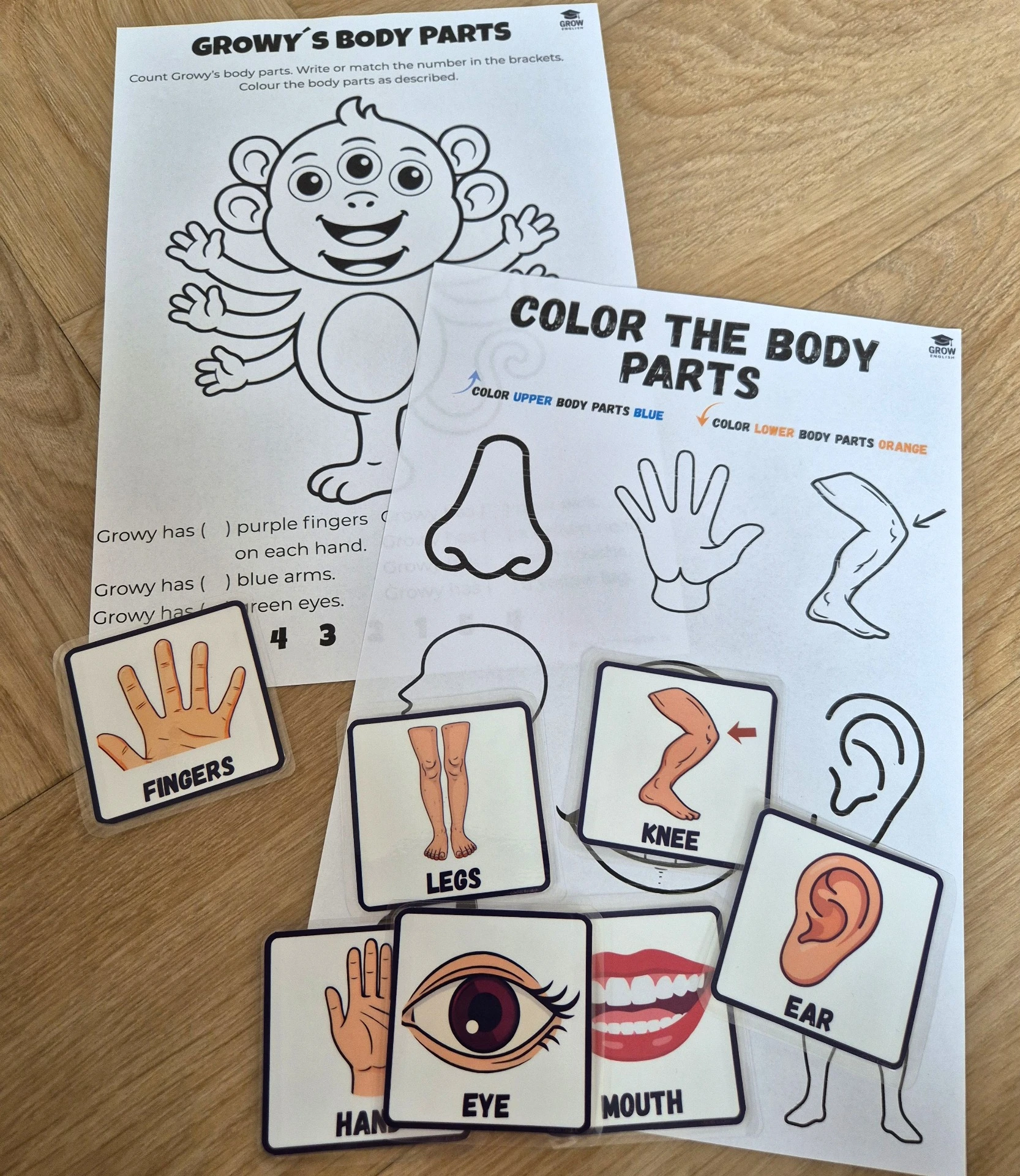
Explore the printable resources and real classroom activities featured in this article.
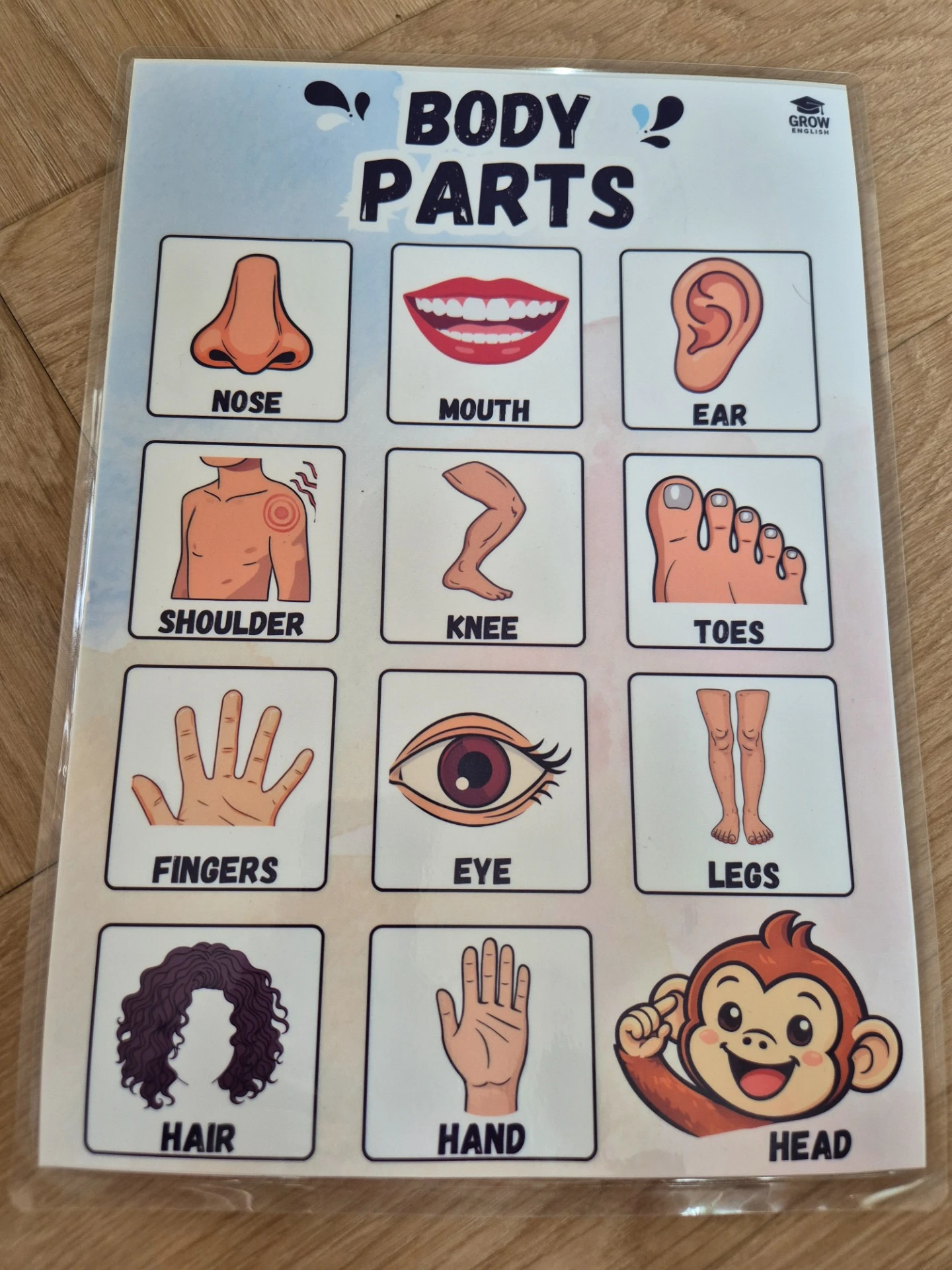
BODY PARTS Printable Pack
30 printable pages for 3+ English lessons
Digital PDF teaching resources
Watch Our Body Parts ESL Activities in Action!
Wondering how these activities work with real preschool children? Here's a little glimpse into my GROW English lessons!
Watch us sing and move to Head, Shoulders, Knees and Toes, create funny faces with Play-Doh, build body parts with a dice game and practise new vocabulary with printable worksheets.
These are real activities I use in my own English classes to help children learn through movement, creativity and play.
Real preschool ESL lessons: movement games, Play-Doh activities, dice games and worksheets.
How to Teach Body Parts in English to Young Learners
Body parts are one of the most natural vocabulary topics for preschool and kindergarten English lessons. Children can see, touch and move the body parts they are learning about.
However, repeating a list of words is rarely enough to keep young learners interested throughout several lessons. Children need opportunities to listen, move, experiment, create and revisit the same vocabulary in different ways.
In my GROW English lessons, I combine flashcards, movement games, songs, printable activities and creative tasks. This gives children time to recognise new words before they are expected to use them independently.
Start with Familiar Vocabulary
Head, eyes, ears, nose, mouth, hair, hands, arms, legs, feet, knees, fingers, shoulders and toes.
Introduce a manageable number of words at a time and return to them frequently.
Begin with instructions such as Touch your nose, Show me your hands and Point to your knees. Children can demonstrate understanding through actions before they feel confident speaking English.
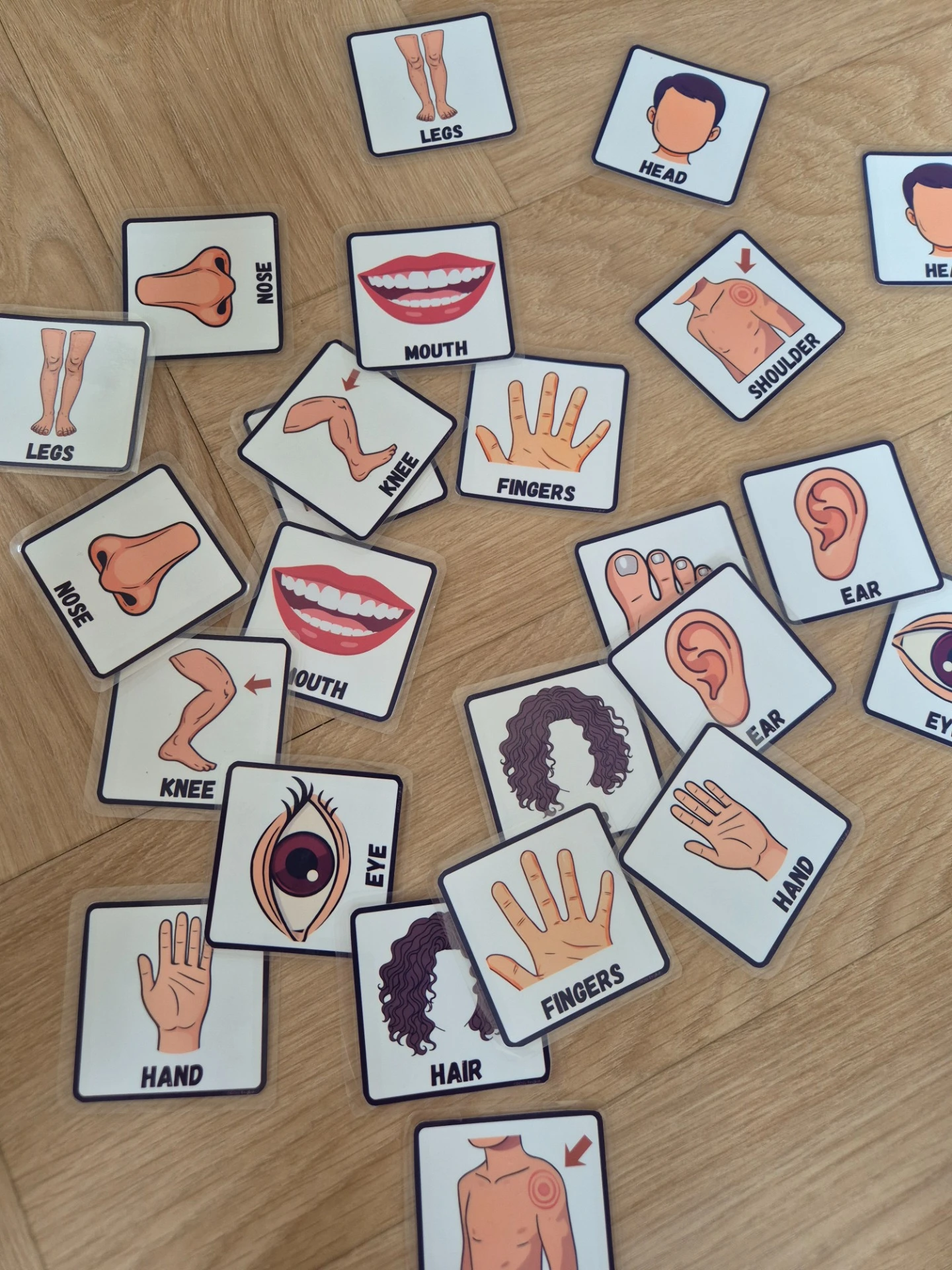
1. Body Parts Flashcard Games
Flashcards are useful for introducing new vocabulary, but they become much more effective when children actively interact with them.
Touch and Say
Place picture cards around the classroom. Call out a body part and ask children to find and touch the correct card.
What's Missing?
Display several cards, ask children to close their eyes and remove one. Can they remember which body part has disappeared?
Show Me!
Hold up a card and ask children to touch the corresponding part of their own body.
Useful Classroom English
Can you find the nose?
Touch your head.
Show me your hands.
What's missing?
Where are your knees?
With younger learners, use fewer cards and accept pointing as an answer. Older children can practise short sentences such as It's a nose or The ears are missing.
2. Growy Says – Our Version of Simon Says
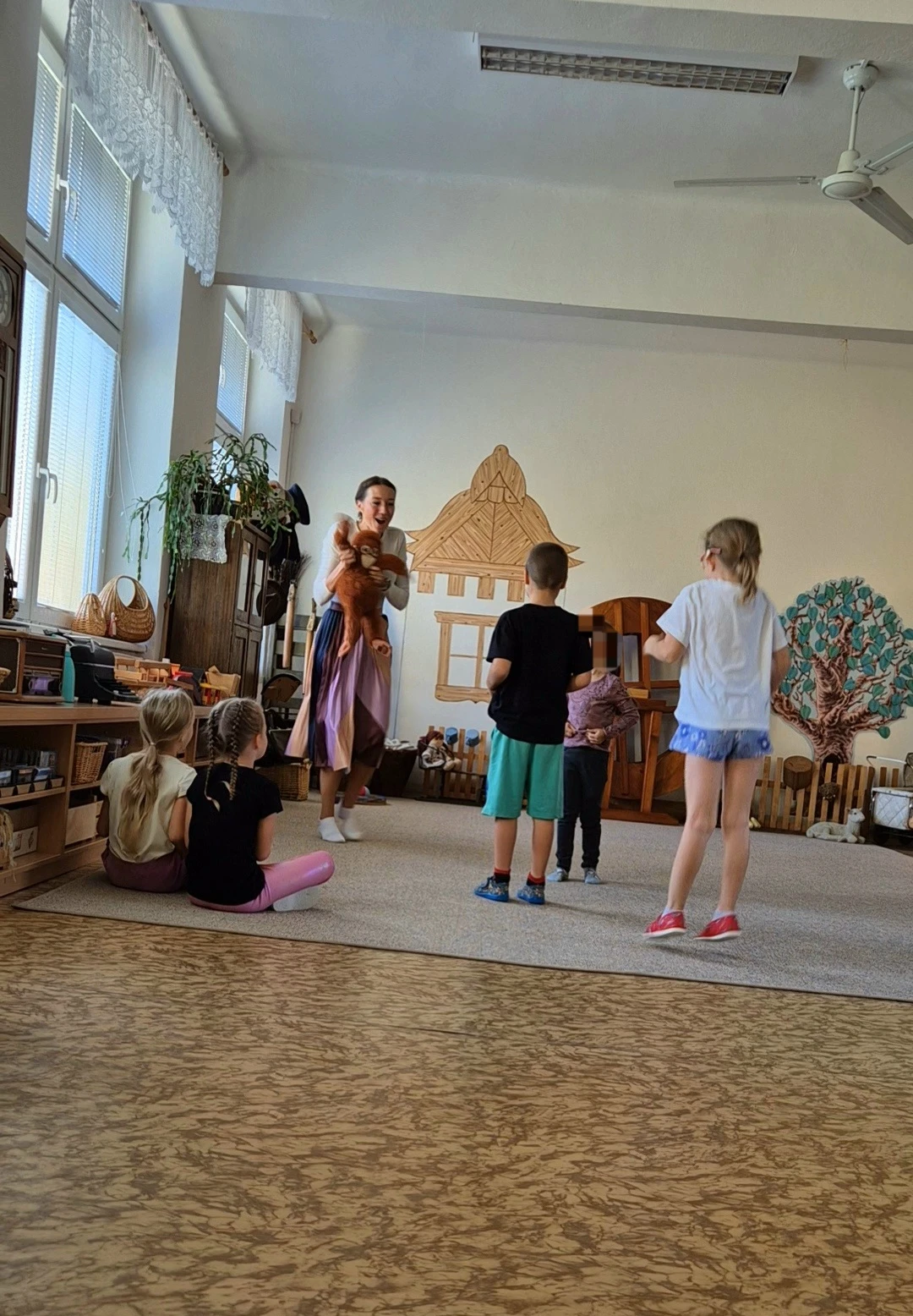
One of our favourite body parts listening games is Growy Says. You probably know the classic Simon Says game, but in our GROW English lessons, Simon has been replaced by Growy, our cheeky little monkey mascot!
Children love when Growy joins our English lessons. The rules are simple: they should only follow an instruction when it begins with Growy says.
How to Play Growy Says
Growy says touch your nose! Children touch their noses.
Growy says put your hands on your head! Children follow the instruction.
Touch your ears! Children must stay still because Growy didn't say it!
I love this game because it requires almost no preparation and encourages children to listen carefully instead of simply copying the teacher's movements.
Start slowly with familiar body parts. Once children understand the rules, increase the speed and add funny instructions to make the game more challenging.
Teaching Tip
With very young beginners, I don't eliminate children when they make a mistake. We simply laugh, try again and continue playing. This keeps everyone involved and confident.
3. Head, Shoulders, Knees and Toes – Sing, Move and Learn!
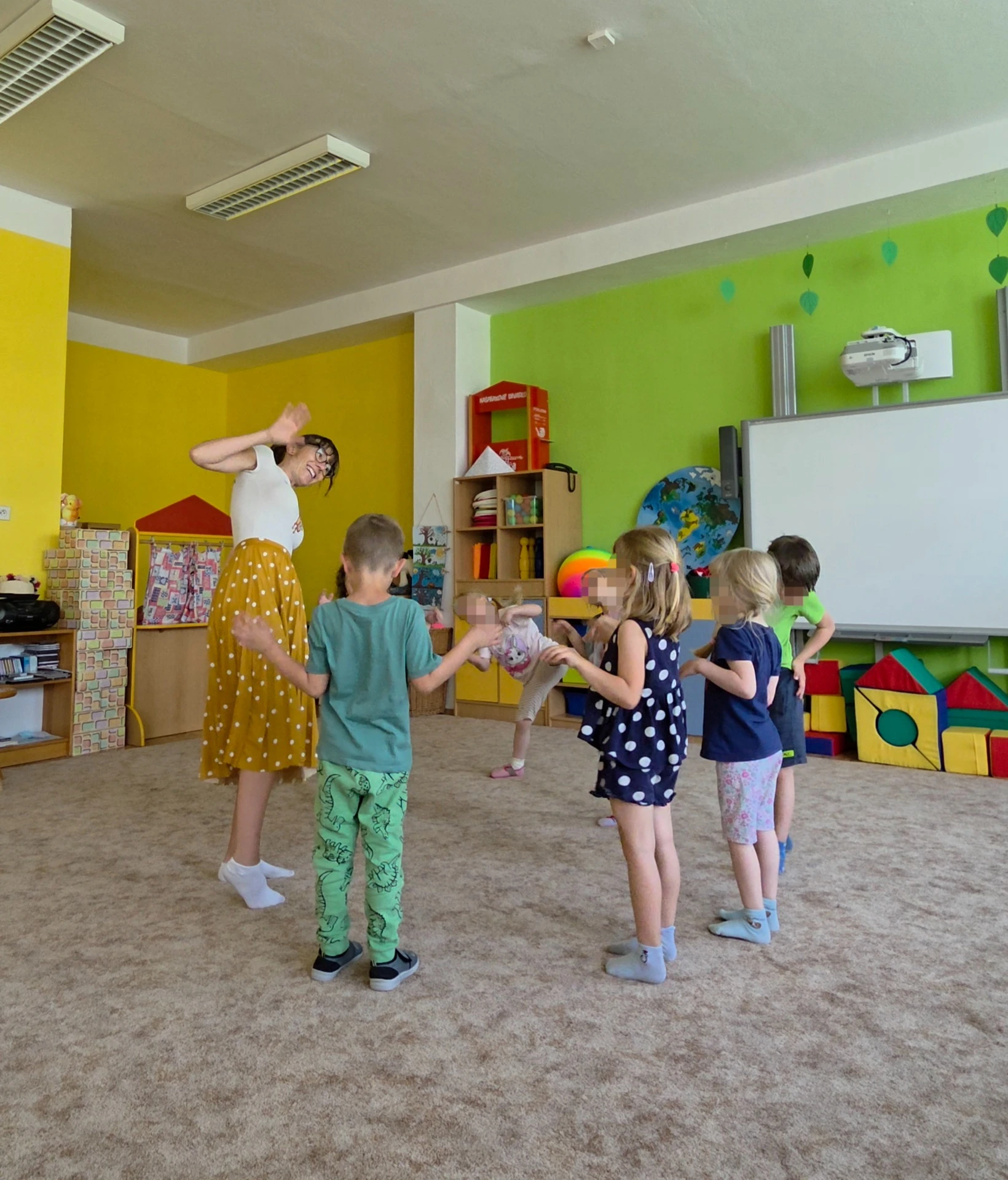
One activity my preschool students absolutely love is the classic action song Head, Shoulders, Knees and Toes. We sing, point to different body parts and follow the movements together.
But the real fun begins when we make the song faster and faster! Children try to keep up with the movements, and the classroom quickly fills with laughter.
It's a wonderful way to practise body parts vocabulary, listening skills and coordination while children are having fun.
Make the Song More Challenging
Start slowly so everyone can follow the movements. Gradually increase the speed and challenge children to keep up.
You can also pause unexpectedly and let children show you the next body part.
Songs are especially useful for revising vocabulary at the start of later lessons. Even children who are not ready to say every word can participate through movement.
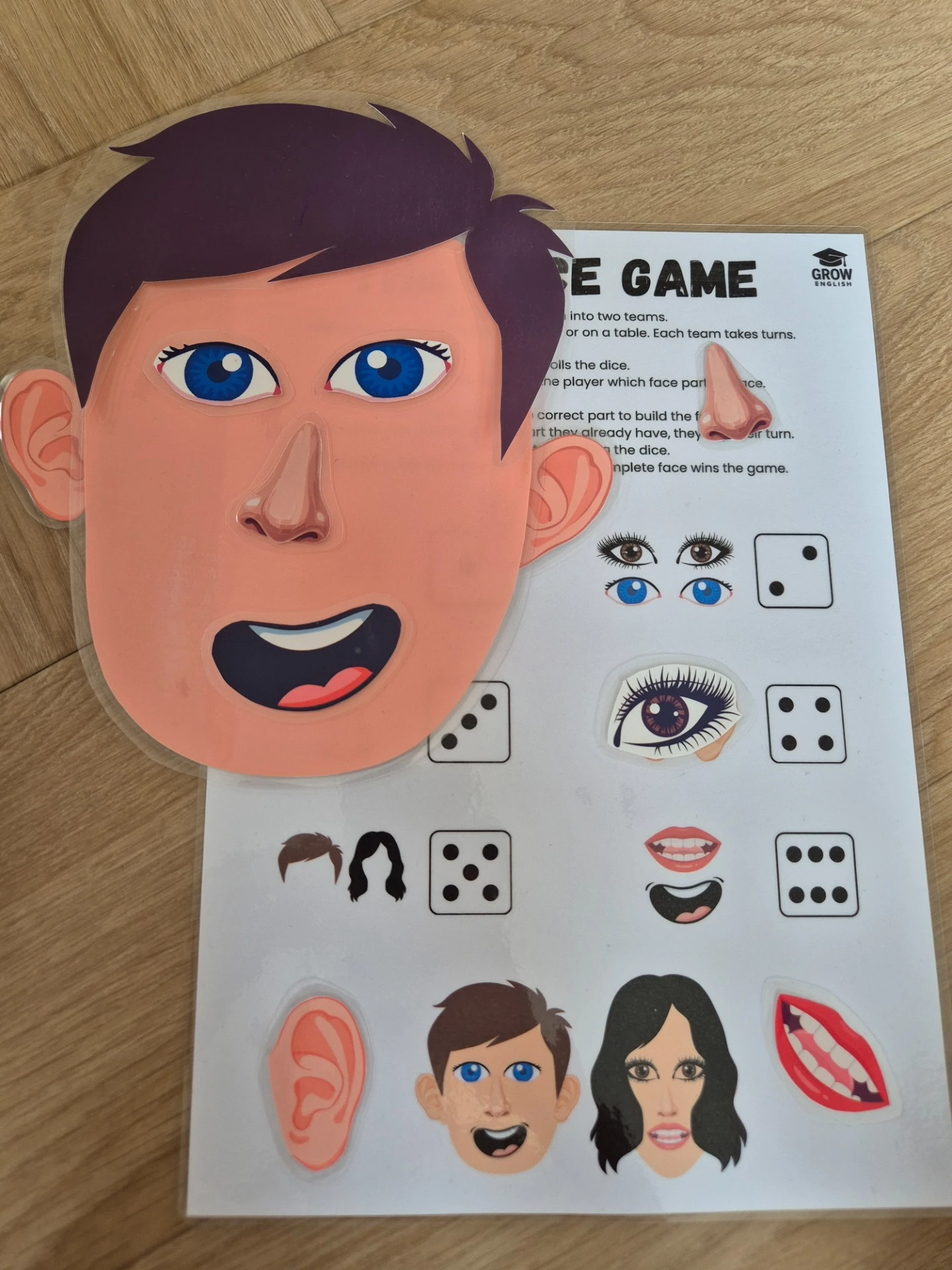
4. Roll the Dice and Build a Face
This hands-on ESL game helps children practise facial features while developing counting and turn-taking skills.
Children roll a dice and gradually build a face using separate pieces. Each number represents a different facial feature.
How to Play
Children take turns rolling the dice, identifying the number and adding the corresponding facial feature to their picture.
If they already have that piece, they wait for their next turn. The first player or team to complete a face wins.
Useful Classroom English
Roll the dice.
What number is it?
What do you need?
Have you got two eyes?
You've finished your face!
For younger learners, focus on recognising and naming the pieces. Older beginners can practise sentences such as I've got two eyes or My face has got a big mouth.
If your students enjoy combining body parts with counting, you can find more playful ideas in my Numbers 1–10 ESL activities article.
One Topic. Several Different Lessons.
You don't need to prepare completely new resources every time you revisit body parts vocabulary. My 30-page BODY PARTS Printable Pack gives you activities to use across three or more English lessons.
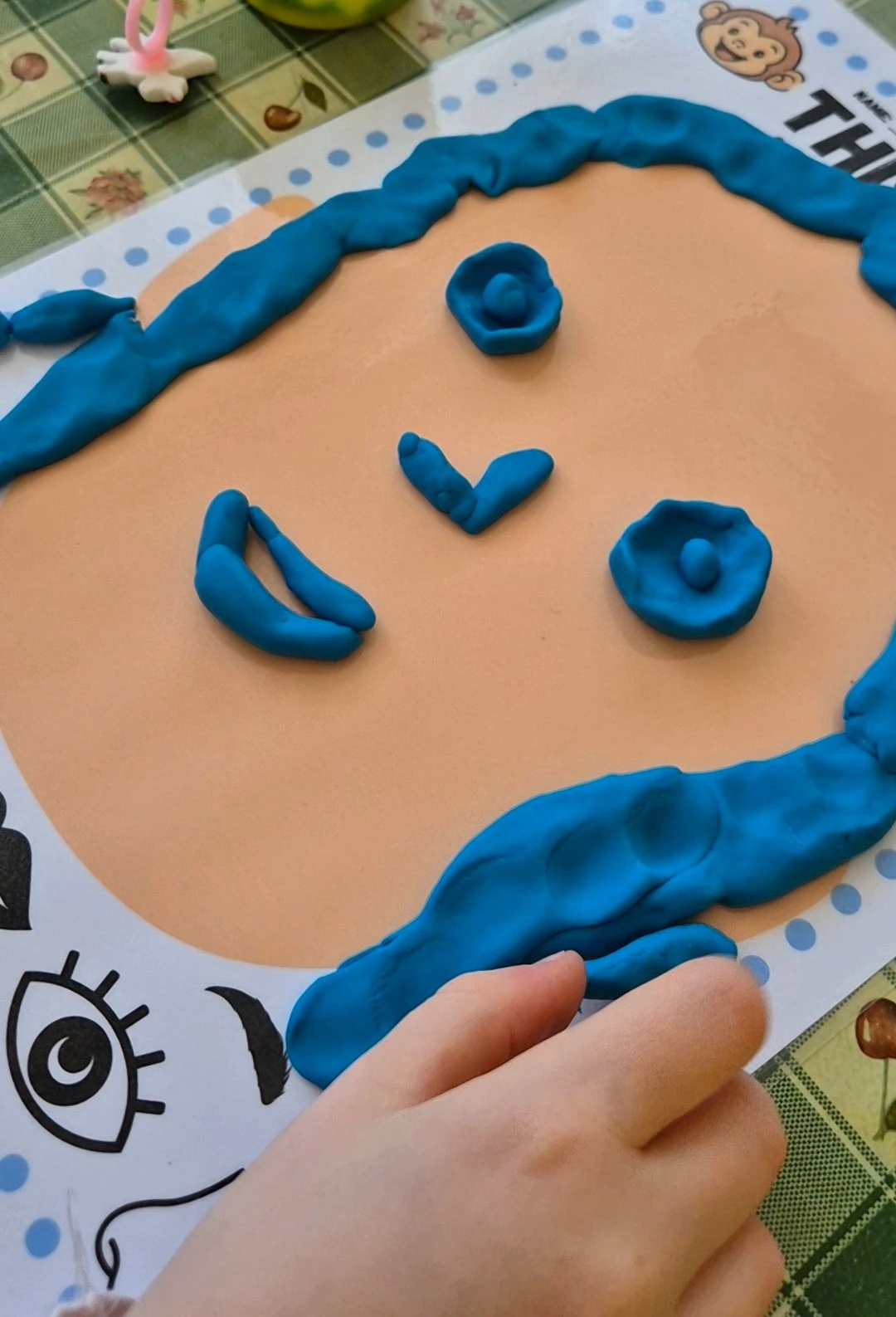
Explore the BODY PARTS Pack5. Play-Doh Faces – Creative Body Parts Practice
Some children learn best through movement, while others become more engaged when they can create something with their hands.
Play-Doh faces are a lovely way to practise facial features, colours and simple descriptions while encouraging creativity.
Make two eyes.
Add a big nose.
Make a happy mouth.
Give your face funny hair.
Show me your finished face!
Older children can describe their creations using has got, colours and adjectives.
For example: My face has got blue eyes and a big mouth.
This activity also works beautifully when revising colours. If you'd like more ideas for combining English with creative tasks, explore my Colours ESL games and activities .
6. One or Two? Body Parts Sorting Game
Body parts vocabulary is perfect for combining English with counting and early grammar.
Children already understand that they have one nose but two eyes. This makes the activity easy to demonstrate.
One
One head, one nose, one mouth.
Two
Two eyes, two ears, two arms, two hands, two legs and two feet.
How to Play
Prepare two sorting areas labelled One and Two. Give children body parts picture cards and ask them to place each picture in the correct group.
Once children understand the task, introduce questions such as How many eyes have you got? and Have you got one nose or two?
This is also a useful opportunity to introduce irregular plural forms such as foot – feet naturally through repetition.
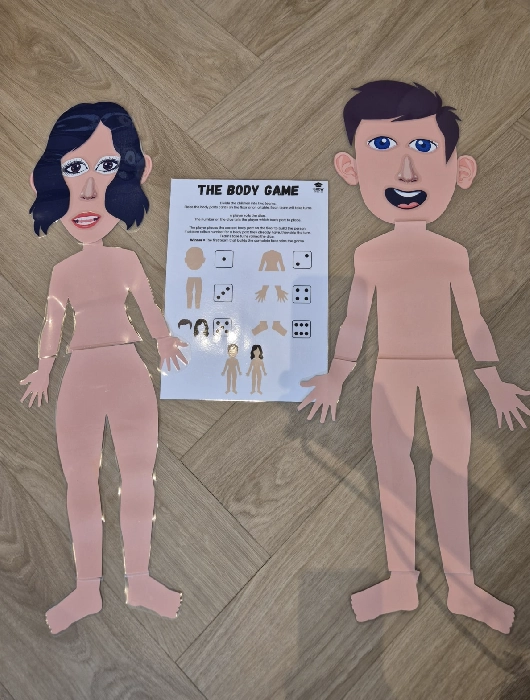
7. Build a Body – A Whole Body ESL Game
Once children are familiar with facial features, I like to introduce an activity focusing on the whole body.
Children work with separate printable body pieces and gradually assemble a complete person.
How to Play
Prepare the body pieces and demonstrate how they fit together. Children take turns selecting the pieces and identifying the body parts before adding them.
Useful Classroom English
What body part is this?
Where does the arm go?
Can you find the other leg?
How many hands have you got?
Is your person finished?
You can make the activity more challenging by asking children to create a funny monster with three eyes or four arms.
Older beginners can describe their finished characters: My monster has got three eyes and four arms.
You can even add a shapes challenge: ask children to give their monster a round head, triangle ears or square feet. For more ideas, take a look at my Shapes ESL activities for kids .
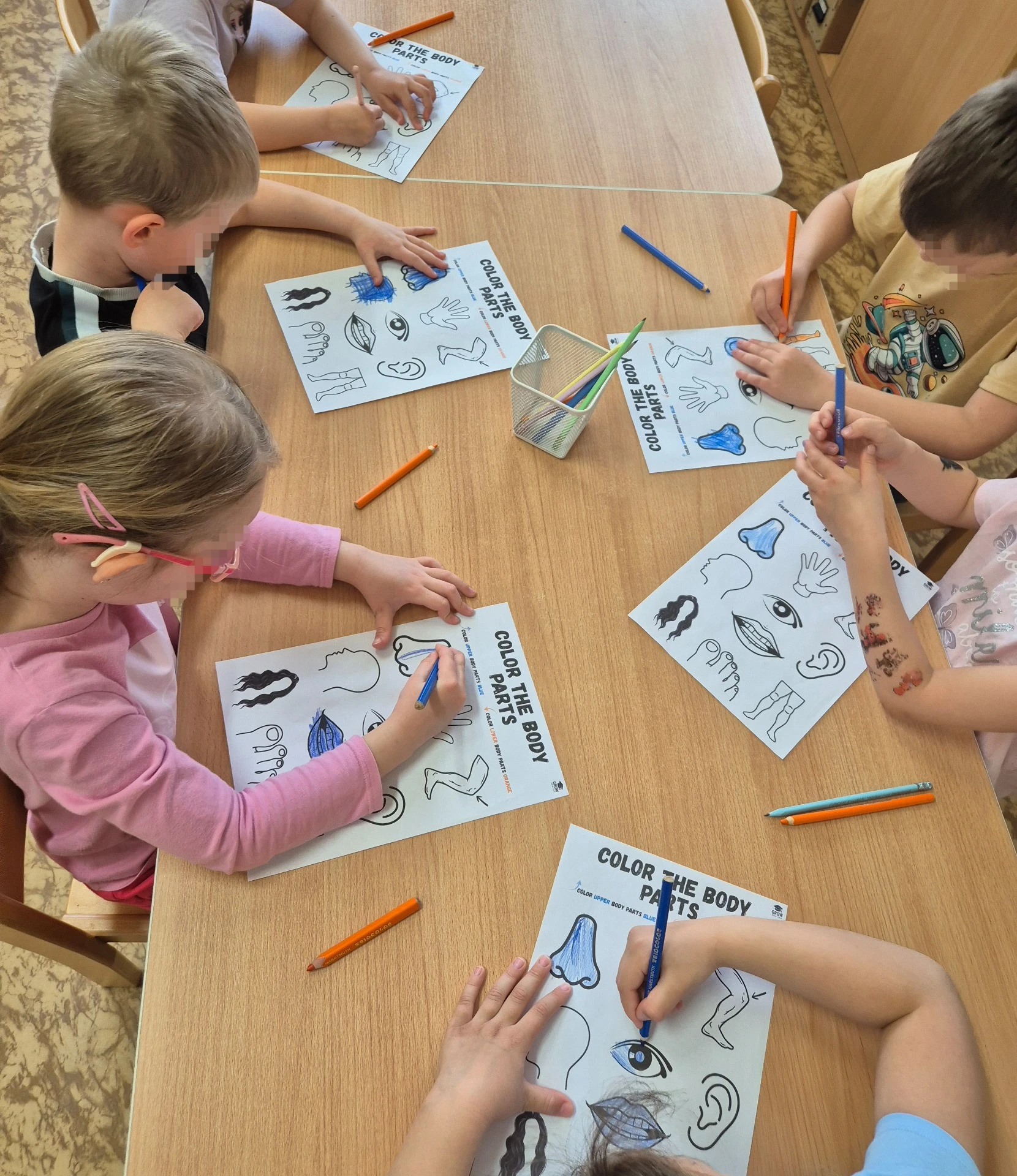
8. Body Parts Worksheets – Colour, Match and Create
After movement games and group activities, I often include a quieter task to help children concentrate on the vocabulary in a different way.
Worksheets become more valuable when they involve listening, recognising vocabulary and responding to instructions, rather than simply colouring a picture without using English.
Colour the nose blue.
Find the ears.
Point to the feet.
Match the body parts.
Cut out the pictures and place them correctly.
Younger children can respond by pointing, colouring or matching. Older beginners can practise written words and short sentences.
I often save some worksheets for the second or third lesson, when children already recognise the vocabulary and can work more independently.
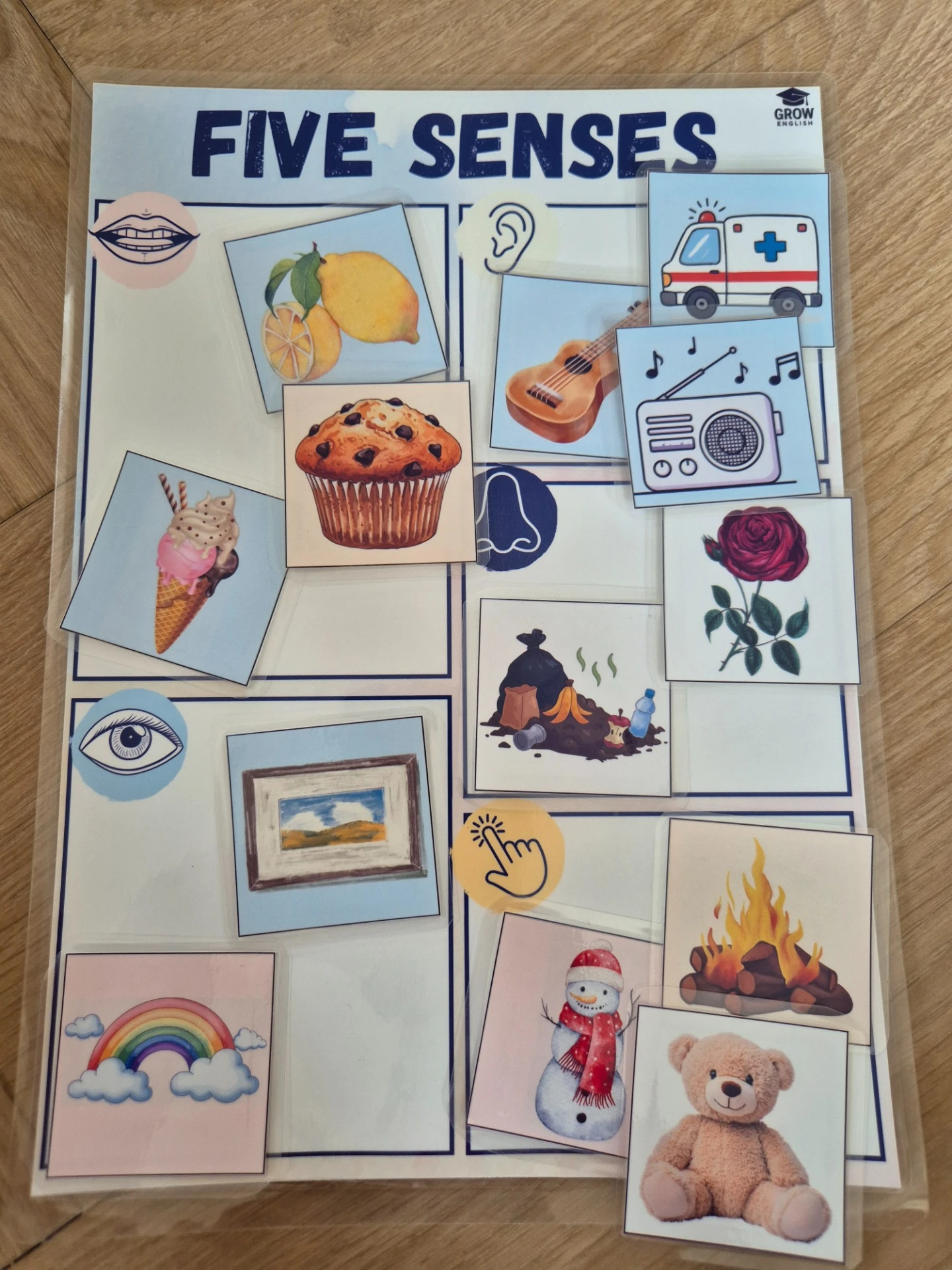
9. Five Senses ESL Sorting Activity
Once children know the main body parts, the five senses provide a natural extension of the topic.
We use our eyes to see, ears to hear, nose to smell, tongue to taste and skin to feel.
Prepare pictures of familiar objects and ask children which sense they would use to explore each one.
Useful Classroom English
What can you see?
What can you hear?
Can you smell the flower?
What can you taste?
Is it soft or hard?
You can extend the activity with real classroom objects. Let children listen to a bell, feel a soft toy or smell a flower.
If you introduce tasting activities, always check allergies and school rules beforehand.
10. Body Parts Memory Game
Memory games are particularly useful for vocabulary revision because children practise the same words repeatedly while trying to find matching pairs.
How to Play
Place picture cards face down. Children take turns turning over two cards and naming the body parts.
If the pictures match, the child keeps the pair. If they don't match, both cards are turned face down again.
Useful Classroom English
Turn over two cards.
What can you see?
Are they the same?
You've found a pair!
Whose turn is it?
For beginners, use fewer pairs. Older children can practise full sentences or match pictures with written words.
I often use memory games at the beginning of later lessons because they make vocabulary revision feel like play.
How to Prepare Your Body Parts ESL Materials
One of the easiest ways to save preparation time is to organise your resources before starting a new vocabulary topic.
Simple Preparation Checklist
1. Print the vocabulary poster and picture cards.
2. Cut out the reusable game pieces.
3. Laminate cards and game pieces you plan to use repeatedly.
4. Prepare a dice for Build a Face.
5. Choose worksheets according to your students' ages and language confidence.
6. Keep some activities ready for your next lessons instead of using everything at once.
I recommend keeping reusable picture cards and game pieces together in a labelled envelope or folder. This makes it easier to bring them back for revision.
How to Use Body Parts Printables Across 3+ Lessons
You don't need to teach every body part or complete every activity in a single lesson.
In my own teaching, I use body parts resources across three or more English lessons. This gives children time to recognise, practise and remember the vocabulary.
Lesson 1 – Introduce the Body Parts
Start with the vocabulary poster and picture cards. Introduce familiar body parts through pointing and movement.
Play Touch and Say, Show Me! and Growy Says. Finish with a simple worksheet or a short action song.
Lesson 2 – Play, Build and Create
Begin with a quick vocabulary review using Head, Shoulders, Knees and Toes.
Continue with Build a Face or Build a Body. Practise numbers, colours and simple descriptions.
Add Play-Doh Faces for creative hands-on learning.
Lesson 3 – Practise and Remember
Revise the vocabulary with a memory game. Introduce One or Two? to practise counting and singular and plural forms.
Continue with printable worksheets or explore the Five Senses if your learners are ready.
Depending on your group, you can extend the topic into additional lessons. Reusable games also work well as warm-ups and revision activities throughout the school year.
Prepare Once. Teach Across 3+ Lessons.
Imagine having your body parts picture cards, games and worksheets ready before your next English lesson.
Instead of searching for another activity every week, choose from 30 printable pages and build several engaging lessons around the same topic.
More variety for your students. Less preparation for you.
Get Resources for 3+ LessonsBody Parts ESL Activities for Different Age Groups
The same vocabulary topic can be taught in different ways depending on children's ages, attention spans and English levels.
Ages 4–5: Learn Through Movement and Play
Focus on a small number of familiar body parts. Use songs, picture cards, Growy Says and short hands-on activities.
Accept pointing and movement as meaningful responses. Children don't need to produce complete sentences immediately.
Ages 6–7: Add Games and Simple Speaking
Introduce more vocabulary and encourage children to name body parts independently.
Build a Face, sorting games, memory games and creative worksheets work especially well.
Ages 8+: Practise Descriptions and Sentences
Use familiar activities with more challenging language. Children can describe characters, count body parts and practise have got and has got.
For example: My monster has got three eyes, two noses and four arms.
How Do You Know Children Understand Body Parts in English?
Repeating vocabulary after the teacher is a useful first step, but it doesn't always show whether children recognise each word independently.
I look for understanding in several different situations.
Listening
Can the child follow Touch your knees without copying another child?
Recognition
Can they find the correct picture among several cards?
Speaking
Can they name a body part when shown a picture?
Using English
Can they answer a question such as How many eyes have you got?
Children often understand English before they feel confident speaking. Pointing, matching, choosing and moving can all demonstrate real understanding.
Frequently Asked Questions About Teaching Body Parts ESL
How do you teach body parts to preschoolers?
Start with familiar words and demonstrate them using your own body. Combine picture cards, movement games, action songs and simple listening instructions. Introduce new vocabulary gradually and revisit it regularly.
What are the best body parts ESL games for kindergarten?
Growy Says, a playful variation of Simon Says, is excellent for listening practice. Build a Face, Build a Body, memory games and sorting activities are also useful because children actively practise the vocabulary.
How many body parts should beginners learn at once?
Start with a small group of familiar words, such as head, eyes, nose, mouth, hands and feet. Add more vocabulary as children become confident. The exact number depends on their age and experience.
How many lessons can I teach with the BODY PARTS Printable Pack?
I personally use these resources across three or more English lessons. The 30-page pack gives you different activities for introducing, practising and revising vocabulary. You can also reuse suitable games in future lessons.
Are body parts worksheets suitable for 4-year-olds?
Yes, when the activities are age-appropriate. Choose clear pictures and simple tasks such as colouring, pointing, matching and sorting. Young children do not need to read or write English to participate.
Do I need to print all 30 pages at once?
No. Choose the resources you need for each lesson. You can print reusable games and picture cards first, then prepare additional worksheets and activities as your students progress.
Can I reuse body parts printable games?
Yes. Suitable picture cards and game pieces can be laminated and used again for vocabulary revision, warm-ups and future classes.
Why a Complete Body Parts Printable Pack Makes Teaching Easier
Preparing one body parts lesson may seem simple. But teaching the topic over several sessions requires more than a single worksheet.
You need resources for introducing vocabulary, games for practising listening and speaking, creative tasks and activities for revision.
Having a collection of resources for the same topic makes it easier to choose activities according to your students' needs.
What Can You Do with 30 Printable Pages?
Introduce body parts vocabulary with visual resources.
Practise familiar words through interactive games.
Combine English with counting, colours and simple descriptions.
Add hands-on tasks and quieter worksheet activities.
Return to the same vocabulary during later lessons without repeating the same activity every time.
This is exactly why I prefer having several different activities ready for one topic. Children benefit from variety, and I can focus more on teaching rather than preparing everything from scratch.
More ESL Activities and Teaching Ideas for Kids
Looking for more fun ways to teach English to preschool, kindergarten and young ESL learners? Explore my other teaching guides filled with practical classroom games, hands-on activities and printable worksheets.
These topics work beautifully together. Once children know body parts, you can combine the vocabulary with colours, numbers, shapes and feelings to create even more engaging English lessons.
Make Body Parts Lessons Fun, Practical and Memorable
Children don't need complicated explanations to begin understanding body parts in English. They need opportunities to hear the words, connect them with something meaningful and practise them in different ways.
A movement game helps children recognise new vocabulary. A dice game gives them a reason to name the words. A creative activity allows them to practise familiar language in a new context.
And returning to the vocabulary across several lessons gives children time to build confidence and remember what they've learned.
I hope these activities inspire your next body parts ESL lessons. And if you'd like to spend less time preparing resources, my BODY PARTS Printable Pack is designed to make that easier.
3+ Lessons. 30 Printable Pages. Less Preparation.
Discover body parts ESL games, worksheets and hands-on activities you can use across several lessons with young English learners.
I use these resources in my own GROW English classes to introduce, practise and revise vocabulary over three or more sessions.
Less searching. Less preparing. More time for teaching.
Get My BODY PARTS Printable Pack€4.99 / $5.99 · 30 printable pages · 3+ lessons