
A little monkey, a few English words and a classroom full of curiosity.
There is a moment during our first English lessons when Growy, my little monkey puppet, pops his head out of a bag and says hello to the children. Some wave back immediately, others smile shyly, and a few simply watch to see what this unexpected visitor is going to do next.
But when Growy starts getting everyone's names wrong, even the quieter children suddenly have something to say. And just like that, our first English conversation begins.
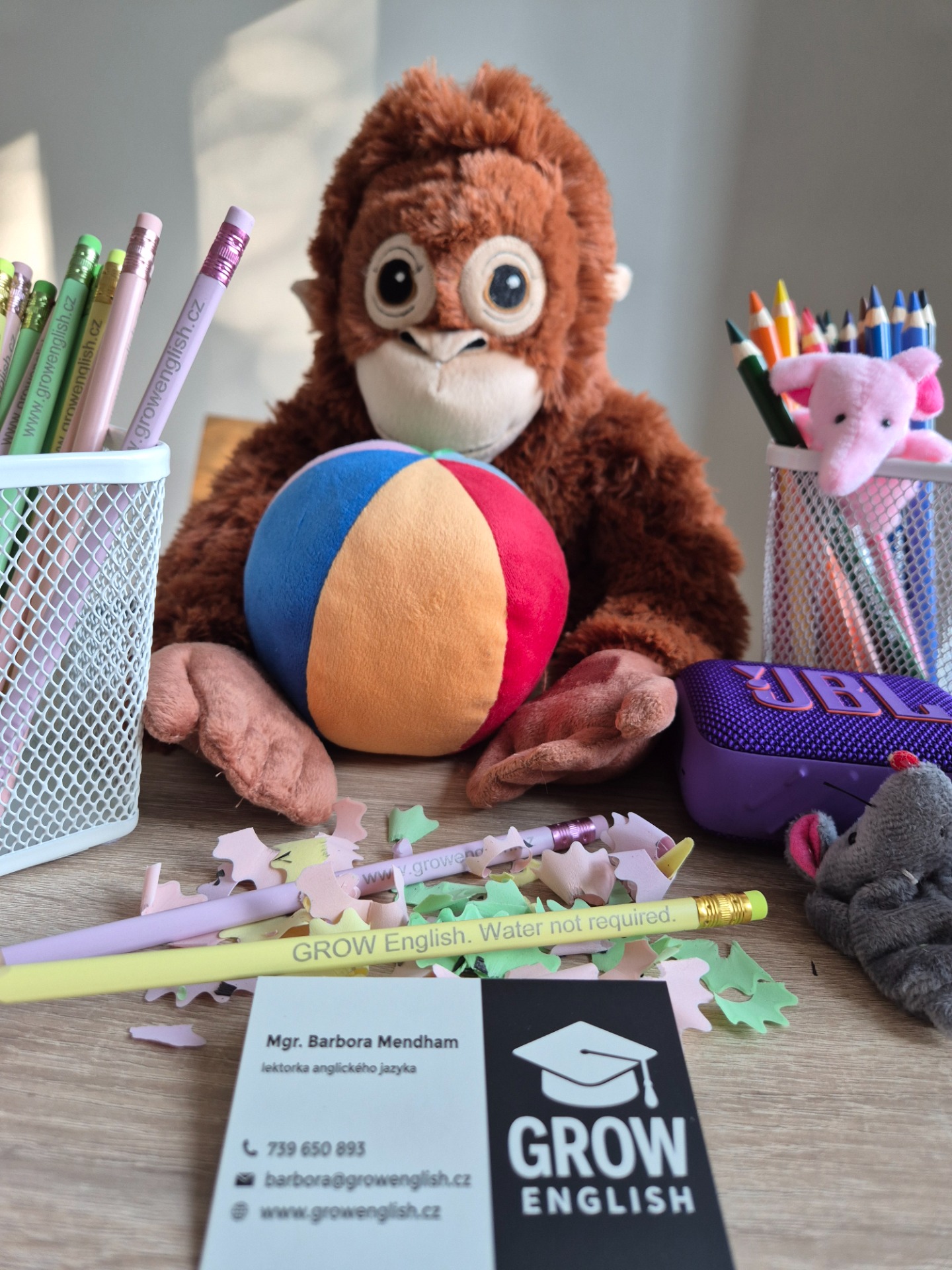
Greetings and feelings are among my favourite topics to teach young English learners because children can start using the language almost immediately, without needing to read, write or understand complicated grammar.
In my GROW English kindergarten lessons, I introduce new vocabulary through familiar routines, movement, puppets and playful activities, gradually adding printable worksheets once children have had time to explore the language together. The same approach works well in small ESL groups, individual lessons and early primary classrooms, where children benefit from hearing familiar expressions in several different situations.
Below, I'm sharing some of the ESL greetings and feelings activities I use in my own teaching, along with ideas for games and worksheets that can easily be adapted to your learners.
Teaching English Greetings Through Play
When introducing greetings to preschoolers, I usually begin with just two expressions: Hello! and Bye-bye! Both have an obvious purpose, and children can understand the difference simply by watching someone arrive and leave. We wave when Growy appears, say goodbye when he disappears and repeat the exchange whenever he decides to come back, which is usually much sooner than expected.
I keep the first few rounds deliberately simple, especially when some children are experiencing English for the first time. Once the basic exchange becomes familiar, we gradually introduce Good morning, Good afternoon and Good evening, using pictures or familiar situations to help children recognise when each expression is appropriate.
Good night deserves a little extra attention because it is usually something we say when leaving for the night or going to bed, rather than when meeting someone. A sleepy puppet, a small blanket and an exaggerated bedtime routine make that distinction much easier for children to understand.
Growy Comes to Visit
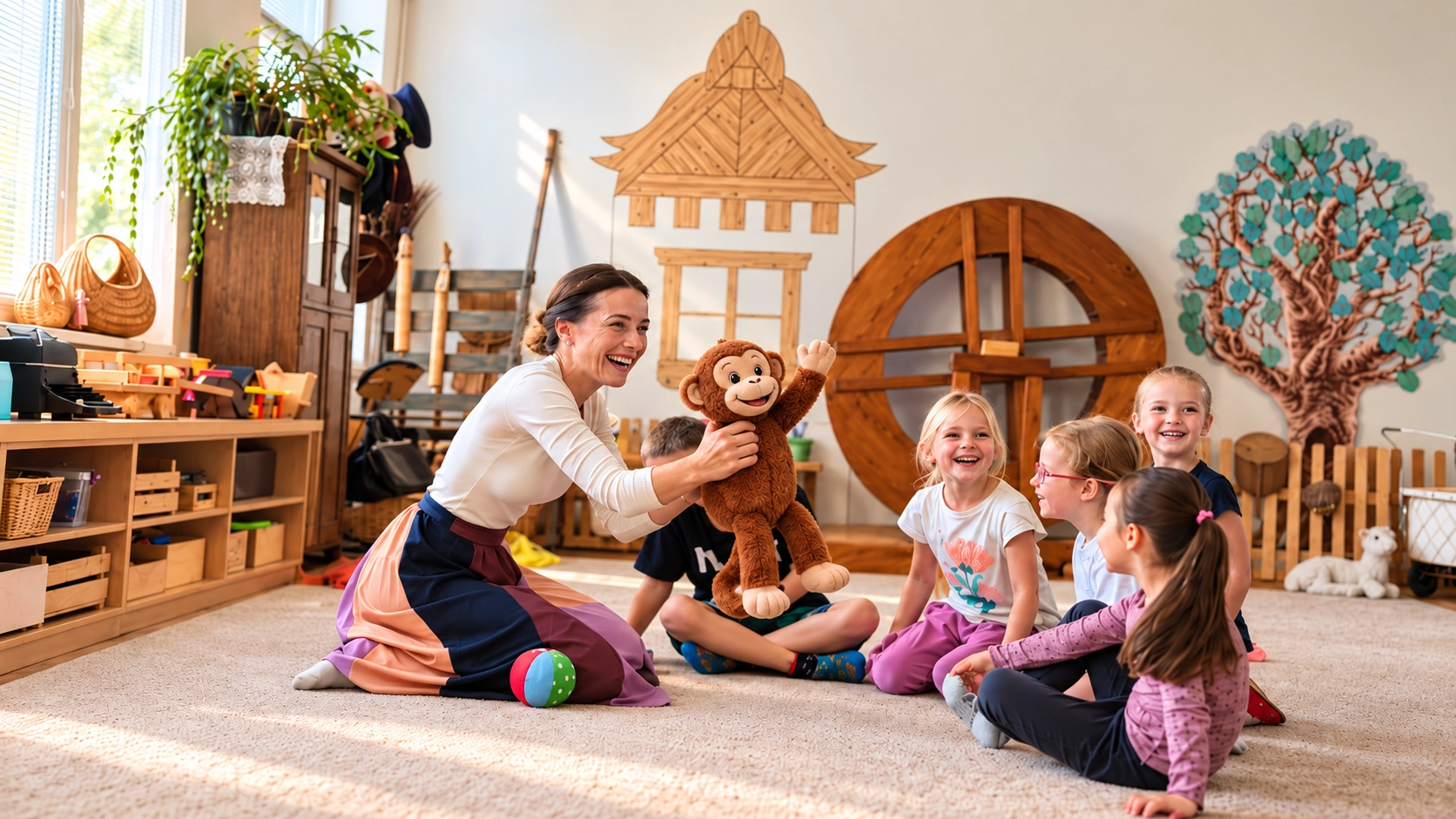
I invite the children to sit in a circle while Growy hides inside a bag or behind my back. I lower my voice, look around as though I have heard something unusual and whisper, "Shhh… Who is it?"
After a few seconds, Growy's head slowly appears and he greets the children. We wave back, say hello and let him visit a few children individually, sometimes offering a high five.
Growy: "Hello!"
Children: "Hello, Growy!"
Growy: "Bye-bye!"
Children: "Bye-bye, Growy!"
Of course, Growy doesn't always understand when a game is over. He might disappear for three seconds before popping out again, which gives the children another opportunity to greet him and usually produces plenty of laughter.
Although the language is simple, children hear the same expressions in slightly different situations, and they gradually begin to anticipate what they should say without needing constant prompting.
A puppet is particularly helpful when working with children who are initially reluctant to speak, because it shifts attention away from the teacher and turns the exchange into a game. If you don't have a classroom mascot, a teddy bear or another familiar toy works just as well.
What's Your Name? Making First Conversations Feel Natural
Once the children are comfortable saying hello, we begin working with the question "What's your name?" and the answer "My name is…" Rather than asking everyone to repeat the sentence after me, I let Growy approach individual children, ask their names and wait patiently for an answer.
Sometimes a child gives a complete sentence, sometimes just their first name, and occasionally they prefer to whisper it. I don't insist on a full answer immediately, because children need time to become familiar with both the language and the experience of speaking in front of their classmates.
When Growy Gets Everyone's Name Wrong
The activity becomes much more entertaining when Growy suddenly starts making mistakes. He might approach a boy named Jack and confidently greet him as Oliver, prompting an immediate reaction from the children, who shake their heads and try to correct him.
Growy: "Hello, Oliver!"
Children: "No!"
Growy: "What's your name?"
Jack: "My name is Jack!"
Growy: "Oh! Hello, Jack!"
This small change turns an ordinary speaking exercise into a meaningful exchange. Instead of answering simply because the teacher expects a response, children are helping somebody who has misunderstood them.
With older or more confident learners, we sometimes pass Growy around the circle so that each child can introduce themselves and ask another child for their name. The same game also works well in individual English lessons, where the puppet can take on different roles and keep a short conversation going naturally.
From Hello to How Are You?
After practising greetings and names, we can begin exploring another useful part of everyday communication: asking someone how they are feeling. For young learners, questions such as "How are you?" and "How do you feel?" are particularly helpful because they can become part of every lesson, rather than appearing only during one vocabulary activity.
I begin with six simple expressions: I'm good, I'm great, I'm sad, I'm hungry, I'm tired and I'm sick. These include both emotions and physical states, giving children a practical way to talk about different everyday experiences.
Instead of translating everything, I demonstrate each expression through facial expressions and gestures. When Growy is tired, he yawns so dramatically that he nearly falls asleep; when he's hungry, he holds his tummy and looks around the classroom as though somebody might have hidden a banana nearby.
Once the children recognise the expressions, I begin asking questions such as "Is Growy tired?" or "How does Growy feel?", allowing them to answer with a word, a short phrase or a complete sentence depending on their confidence.
A little classroom observation: Not every child wants to describe their own emotions, especially in front of a group. Sometimes it's easier to talk about how a puppet or a character is feeling, and that still gives children valuable opportunities to practise English.
Growy Says: A Feelings Game for Kindergarten
Children usually enjoy practising feelings through movement, which is why I often introduce Growy Says, our version of the traditional Simon Says game, once the vocabulary has become familiar.
Before playing, we agree on a simple action for each expression. The children might yawn when they hear tired, hold their tummies for hungry, make a sad face for sad or stretch their arms into the air for great. A smile and thumbs-up gesture works well for good, while sick can be demonstrated by putting a hand on the forehead.
Listen Carefully to Growy!
When Growy gives an instruction beginning with "Growy says", everybody performs the action. If he forgets those words, the children must remain still, even if they recognise the feeling.
"Growy says: I'm tired!"
Everyone pretends to yawn.
"I'm hungry!"
Nobody moves this time!
I begin with only two or three expressions and give the instructions slowly, particularly with younger preschoolers. As the children become more confident, we add the remaining vocabulary and gradually increase the pace of the game.
There is no need to eliminate children who make a mistake. They can simply correct themselves and continue playing, which means everyone gets more opportunities to hear and recognise the language.
Older children sometimes enjoy taking over the instructor's role, giving directions to the rest of the group while I help them form the instructions in English. This adds a useful speaking element to an activity that initially focuses on listening comprehension.
See Feelings and Emotions in Action
Curious to see how these ideas come to life? Here's a little glimpse into my GROW English kindergarten lessons, where children explore English through playful activities, movement and plenty of opportunities to join in.
Free Feelings and Emotions Worksheets for Kids
After an energetic game, I often move on to a quieter activity, especially when children need a chance to sit down and concentrate. Printable ESL worksheets can be useful at this stage, provided that the children already understand the vocabulary and don't have to rely on reading skills they haven't yet developed.
For our feelings lessons, I created a printable activity called Colour Emotions, featuring Growy with different facial expressions. The resource comes in three versions so that teachers can adapt the same basic activity to different ages and levels of English.

The first version uses coloured examples that younger children can match without needing to read. Another connects the pictures with written feelings vocabulary, while the black-and-white version allows teachers to give their own listening instructions.
I might ask the children to colour the tired monkeys blue and the hungry monkeys red, for example. They first colour the example faces and then find the matching expressions, practising English listening, vocabulary recognition and colours through one manageable task. When a worksheet already includes a colour key, I use the colours shown on the page.
Try Colour Emotions in Your Next Lesson
If you're looking for a simple activity to practise feelings with young English learners, you can download three printable versions of Colour Emotions and choose the one that best suits your group.
Download Free Feelings WorksheetsThe download form may display Czech text. The worksheets use English vocabulary.
Because this activity also gives children an opportunity to practise colours, it fits naturally alongside other classroom games on the same topic. You can find more inspiration in my article about teaching colours in English through games and printable activities.
Once children recognise colour words and basic feelings, I sometimes combine them with numbers too. Instructions such as "Find three happy faces" or "Colour two tired monkeys blue" bring familiar vocabulary together, and my article about teaching Numbers 1–10 in English offers more ideas for simple counting, movement and matching activities.
Making Feelings with Play-Doh
Modelling dough is another lovely way to revisit feelings vocabulary, particularly when children enjoy hands-on activities and need a change from flashcards or colouring. For this activity, I use printable mats featuring Growy's face, which children can decorate with different mouths and eyebrows to create their own expressions.
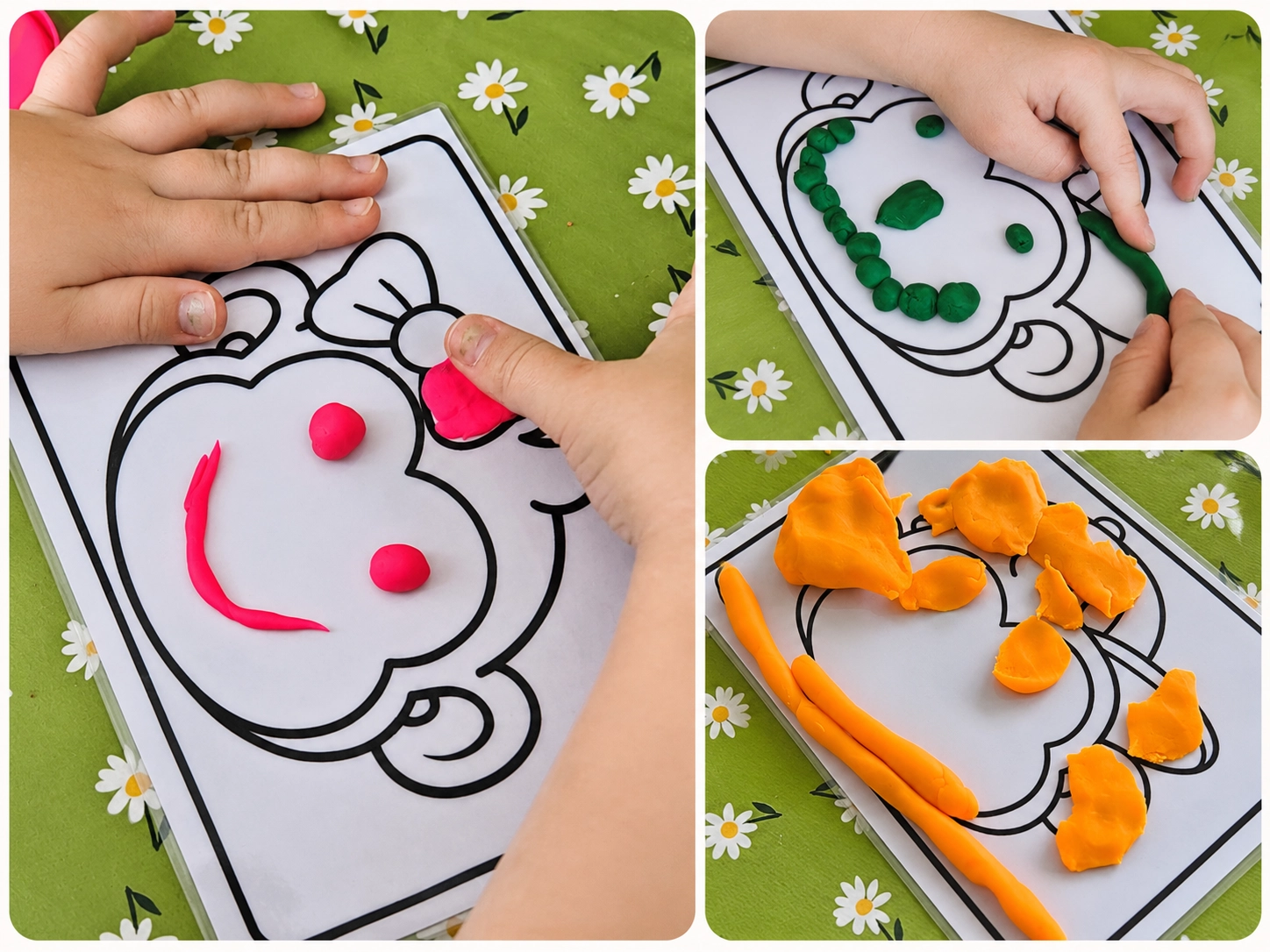
A child might give Growy a sad-looking mouth, while another creates an enormous smile. As they work, I ask "How does Growy feel?" or "Is he sad?", and the children respond according to the expression they have created.
Younger children may begin by saying just one word, while older learners can practise full sentences or ask each other questions. I particularly like this activity because children are making their own decisions rather than simply identifying an expression somebody else has drawn for them.
Try this in a small group: Let one child create an expression without showing the others. When the face is ready, the group guesses how Growy is feeling. The activity can be repeated with different emotions, giving everyone another chance to hear and use the language.
Play-Doh is also one of my favourite ways to connect familiar topics, especially when a child is ready for something more than simply repeating individual words. A face can become a happy face, then a happy face with two big eyes, bringing colours, numbers and descriptive language into the activity. A similar approach works when teaching shapes through games and Play-Doh activities, where children create and describe circles, squares and triangles.
Printable Greetings and Feelings Games for Young ESL Learners
One of the challenges of teaching young children is finding enough variety to revisit the same vocabulary over several lessons without making every activity feel repetitive. I might introduce a topic with a puppet, revisit it later through a movement game and then use a matching or colouring activity when the children need a quieter pace.
Having several options available makes it much easier to respond to the group in front of me instead of feeling that every lesson has to follow a fixed plan. That is why I created my Greetings & Feelings printable ESL activity pack, which contains 9 PDF files and 27 printable pages.
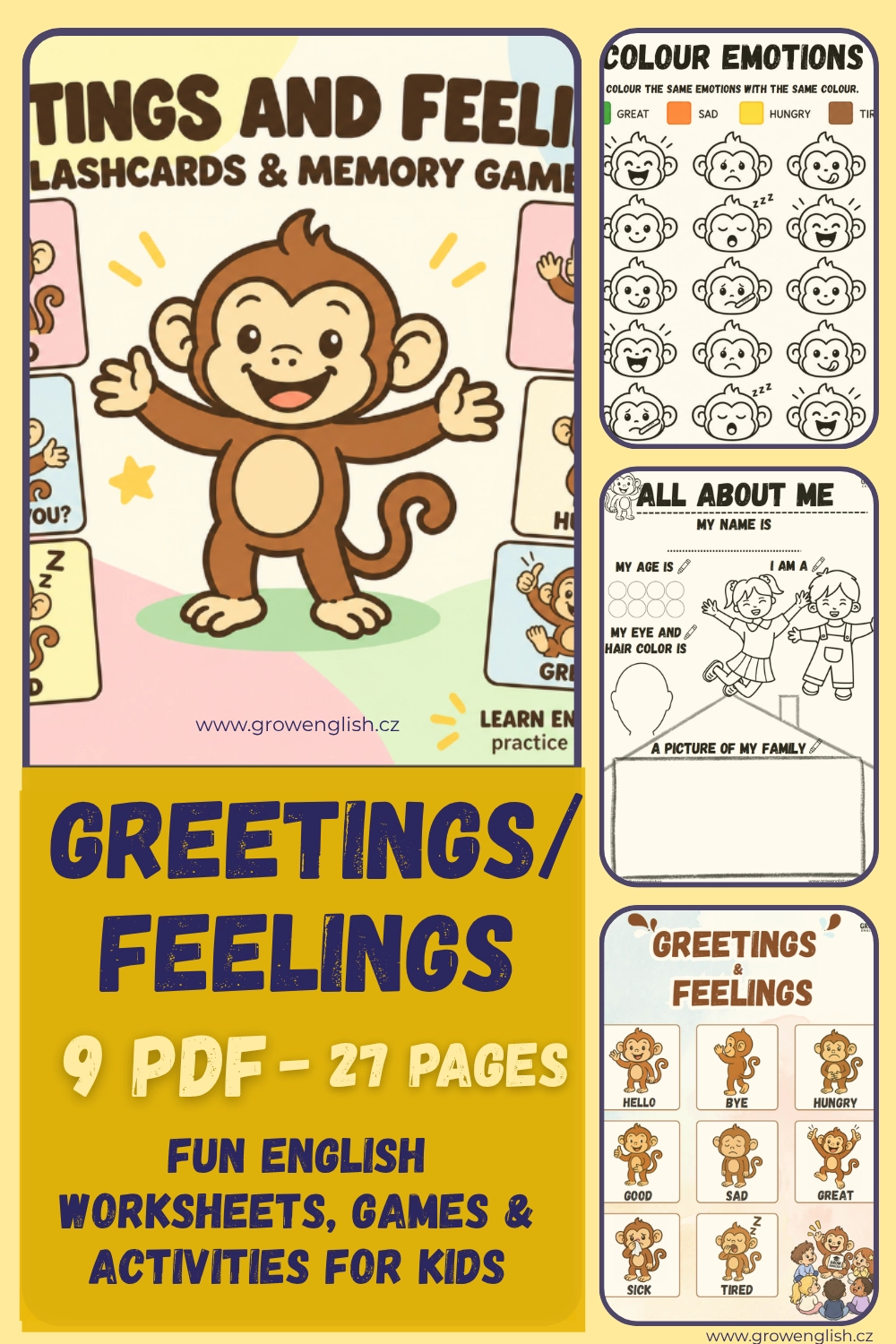

Inside the collection, you'll find a greetings and feelings poster, an All About Me worksheet, flashcards, a memory game, picture-matching activities, Hello and Goodbye tasks, feelings worksheets and Play-Doh emotion mats.
The materials are designed to be printed and used in different combinations, depending on the children's age, confidence and previous experience with English. You can return to the topic over several lessons without repeating the same activity every time.
For a preschool group, I might begin with Growy, practise the greetings through movement and finish with a simple visual activity. In a private lesson with an older beginner, the same materials can be used to practise short conversations, matching games and early reading.
I don't believe that every activity needs to be completed in one lesson, or even in a particular order. What matters is having useful options available when you want to introduce, practise or revisit familiar language.
Ready for Your Next Greetings & Feelings Lesson?
If you enjoy teaching English through games but would rather spend less time creating every worksheet and activity from scratch, my Greetings & Feelings pack brings together printable resources you can use across several lessons. With 9 PDF files and 27 printable pages, you'll have games, flashcards, worksheets and creative activities ready whenever you need them.
Get the Greetings & Feelings ESL PackDigital PDF teaching resources. English checkout available in USD or EUR.
Helping Children Use English Beyond One Lesson
Although games and printable activities make learning enjoyable, I find that some of the most useful progress happens when children begin recognising expressions from previous lessons and using them in familiar situations. We greet Growy when he arrives, ask somebody's name during a circle game and talk about how a character is feeling before beginning an activity.
At the end of the lesson, everybody knows that it's time to say goodbye, and these small exchanges gradually become part of our normal routine. Some children are ready to speak after hearing an expression only a few times, while others prefer to watch and listen for longer, and I try to give both groups enough opportunities to participate.
If a child corrects Growy when he says the wrong name, recognises that the puppet is tired or independently says "Bye-bye!" as the lesson finishes, the language has started to mean something beyond the activity itself.
That is what I aim for when teaching English to young children: helping them become comfortable with the language and gradually discover that even a few simple English words can help them communicate.
As their vocabulary grows, children can also begin combining feelings with other familiar topics. We might, for instance, talk about feeling cold on a winter day or choosing clothes when it's hot, which connects naturally with my ESL activities for teaching clothes, weather and seasons together.
At GROW English, I create my printable teaching materials around these kinds of classroom experiences, with activities covering greetings and feelings, colours, numbers, shapes, animals, food and other familiar themes.
If you're planning English lessons for preschoolers or young beginners, you can explore more GROW English games, worksheets and teaching ideas and choose the topics that fit your next lesson.
Let your English grow! 💜